Picture this: You’re on a deadline, coffee in hand, ready to conquer your digital to-do list—and then, BAM, ‘www.ojrq.net is blocked.’ Been there? So have I! The first time this happened to me, I spent twenty minutes blaming my Wi-Fi before realizing my ad blocker was the real culprit. Sometimes, the solution is just as sneaky as the problem. In this post, we’ll pry open the lid on website access headaches, reveal surprising fixes (and myths), and maybe even have a laugh along the way.
When ‘This Site Can’t Be Reached’ Drives You Up the Wall: What’s Actually Happening?
You’ve been there—frantically clicking refresh, restarting your router, and questioning your internet provider’s existence, only to discover your browser extension was the culprit all along. When you’re unable to access website content, those cryptic error messages HTTP codes aren’t just digital gibberish—they’re actually trying to help you.
Let’s decode the most common culprits behind website access issues:
- 404 Not Found: The page moved or doesn’t exist
- 500 Server Error: The website’s having internal problems
- 502 Bad Gateway: Communication breakdown between servers
- 403 Forbidden: You’re not allowed to access this content
‘Error codes are internet hieroglyphics—get good at reading them, and the digital world gets a lot less scary.’ – Linh Vo, Senior Web Analyst
Here’s the encouraging news: systematic troubleshooting resolves 88% of website access problems. That means most times you’re pulling your hair out, there’s actually a straightforward fix waiting.
| Resolution Rate | Common Error Codes |
|---|---|
| 88% success with systematic fixes | 404, 500, 502, 403 |
Sometimes the issue isn’t your Wi-Fi or the website itself. Browser cache corruption, outdated cookies, or that ad-blocker extension you installed last month can create phantom problems. I once spent an hour troubleshooting my network setup, only to realize clearing my browser cache instantly fixed everything.
The remaining 12% of cases? Those will test your patience and might require deeper technical investigation. But understanding these error messages gives you a roadmap instead of wandering blindly through digital frustration.
Kickstart the Fix: Old-School Tricks, Geeky Tweaks, and a Table of Tried-and-Tested Steps
When you hit that dreaded “blocked” message, don’t panic. Start with the basics—yes, seriously, unplug your router for 30 seconds and plug it back in. This ancient ritual still fixes website errors more often than you’d think.
Browser Troubleshooting Steps That Actually Work
Your first move should be testing the site on another device or network. If it loads elsewhere, you’ve isolated the problem to your setup. Next, try a different browser—Chrome, Firefox, and Edge each have their quirks, and sometimes switching browsers is faster than fixing your current one.
‘Sometimes, it’s faster to change browsers than to fix the existing setup—don’t knock it till you try!’ – Emilio Garcia, IT Specialist
Time to clear browser cache and cookies. These digital cobwebs cause more issues than most people realize. While you’re at it, flush your DNS cache—it’s like exorcising website ghosts from your system.
| Step | Action | Success Rate |
|---|---|---|
| 1 | Restart connection | High |
| 2 | Disable firewall/antivirus | Medium |
| 3 | Clear browser cache | High |
| 4 | DNS cache flush | Medium |
| 5 | Change DNS servers | Low |
Wild Card Scenarios
Don’t laugh, but check if someone accidentally unplugged your router. Your neighbor’s cat, curious toddler, or overzealous vacuum cleaner might be the culprit. Stranger things have happened in the world of tech support.
These basic checks solve most access website issues before you need to dive into advanced settings. Work through them systematically—you’ll be amazed how many problems vanish with these simple fixes.
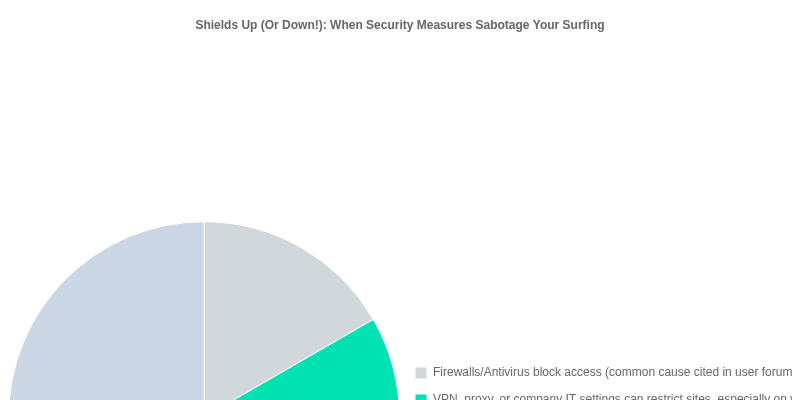
Shields Up (Or Down!): When Security Measures Sabotage Your Surfing
Your firewall antivirus software might be your biggest enemy when accessing blocked sites. These protective programs are notorious for over-blocking, treating harmless websites like dangerous threats. When you see extension-related blocks, your security setup could be working too well.
The Security Software Experiment
Try temporarily disabling your firewall or antivirus software to see if the blocked site magically appears. Don’t worry—a few minutes won’t doom your computer. If the site loads, you’ve found your culprit.
VPN Proxy Settings Gone Wrong
Your VPN proxy settings might tunnel you out of a website’s allowed region. Some sites block specific countries or VPN server locations. Check your connection settings and try different server locations.
DNS Server Solutions
Changing to public DNS servers like Cloudflare (1.1.1.1) or Google (8.8.8.8) often resolves stubborn blocks. Access your router admin panel to make network-wide changes, or adjust individual device settings.
| Security Tool | Block Type | Quick Fix |
|---|---|---|
| Firewall | Port/Protocol blocking | Temporary disable |
| Antivirus | URL filtering | Add site exception |
| VPN | Geo-restrictions | Change server location |
| DNS | Domain resolution | Switch to public DNS |
Corporate Complications
Company security policies on work devices create additional barriers. Corporate IT departments often implement aggressive filtering that affects personal browsing.
“It’s not always the hackers—it’s sometimes your own security setup locking you out.” – Sara Blanchard, Cybersecurity Consultant
Remember: security software protects you, but sometimes requires fine-tuning to balance protection with accessibility.
Surprising Twists: When Advanced Settings or Company Policies Get in Your Way
Sometimes your blocked website isn’t about basic browser settings. You might be dealing with deeper network configuration issues that require a more technical approach.
IPv6: The Hidden Culprit You Never Suspected
Here’s a techie tweak you probably didn’t know you needed: disabling IPv6 can fix some rare and persistent access problems. When you IPv6 disable PC settings, you’re forcing your computer to use the older IPv4 protocol, which many websites handle more reliably. This simple change has rescued countless users from mysterious connection failures.
Website Port Numbers: Blocked for Security Reasons
Notice unusual website port numbers in URLs? Your network might be blocking specific ports for security reasons. While standard web traffic uses ports 80 and 443, some sites use custom ports that trigger automatic blocks.
When Your Organization IT Department Controls Everything
If you’re on a work laptop or managed device, company security policies may be the hidden cause behind your access issues. Your organization IT department often implements:
- Custom firewall rules blocking specific domains
- DNS filters that redirect certain websites
- Browser policies you can’t override
- Network-wide restrictions on port access
These invisible obstacles operate at the system level, making them impossible to bypass with standard browser troubleshooting.
“If you’re hunted by a persistent ‘site can’t be reached’ error, don’t be afraid to call in your IT cavalry.” – Priya Raman, Systems Administrator
Work devices typically have stricter DNS, firewall, and network rules than personal computers. Before spending hours troubleshooting, check if you’re dealing with managed device restrictions that require administrative intervention to resolve.
From Frustration to Empowerment: Building Your Own Website Access Troubleshooting Ritual
Here’s the truth: website troubleshooting steps become second nature when you create your own systematic approach. Think of it like searching for lost keys—you naturally develop a pattern of where to look first, what to try next, and when to call for backup.
Even seasoned tech experts follow what might seem like silly steps. The difference? They’ve curated their own quick checklist based on what actually works for their setup. When you encounter that dreaded “blocked by an extension” message, your personal troubleshooting ritual kicks in automatically.
Creating Your Personal Systematic Approach to Troubleshooting
Start documenting what fixes actually work for you. Did disabling extensions resolve website access last time? Write it down. Research shows that personalized troubleshooting routines lead to faster resolutions and significantly less stress.
Keep track of both successful fixes and dead ends. That extension you disabled that didn’t help? Note it. Next time, you’ll skip straight to what actually worked. This creates a mental or written checklist that makes future problems feel less overwhelming and more manageable.
“Even if you feel like you’re fumbling, that’s part of learning tech. Every glitch can leave you a little savvier.” – Marcus Lund, Technical Support Trainer
Your troubleshooting grows more intuitive with each blocked webpage you encounter. Those personal checklists and hard-won experience trump even the fanciest how-to guides when you’re fighting obscure web blocks.
Remember, users who document their fixes speed up problem-solving in repeat scenarios dramatically. What feels like frustration today becomes your empowerment toolkit tomorrow. Every “this page has been blocked” message is just another opportunity to refine your approach and build confidence in your tech troubleshooting abilities.
TL;DR: Before you curse your Wi-Fi, walk through the weird and practical tips in this blog. Odds are, you’ll resolve most website blocks—and maybe even discover your own go-to troubleshooting ritual.